Vladimir Babin
10+ years building native iOS and macOS apps in production — healthcare platforms used in clinics, blockchain products, client work delivered on short cycles. I like the unglamorous parts: driving a crash rate down, making a large team's architecture hold up under change, getting a new project from kickoff to a testable build in a couple of weeks. These days that's several concurrent client apps — some fully SwiftUI, others built on shared Kotlin Multiplatform modules — plus my own apps on the App Store. Four projects follow.
Symplast
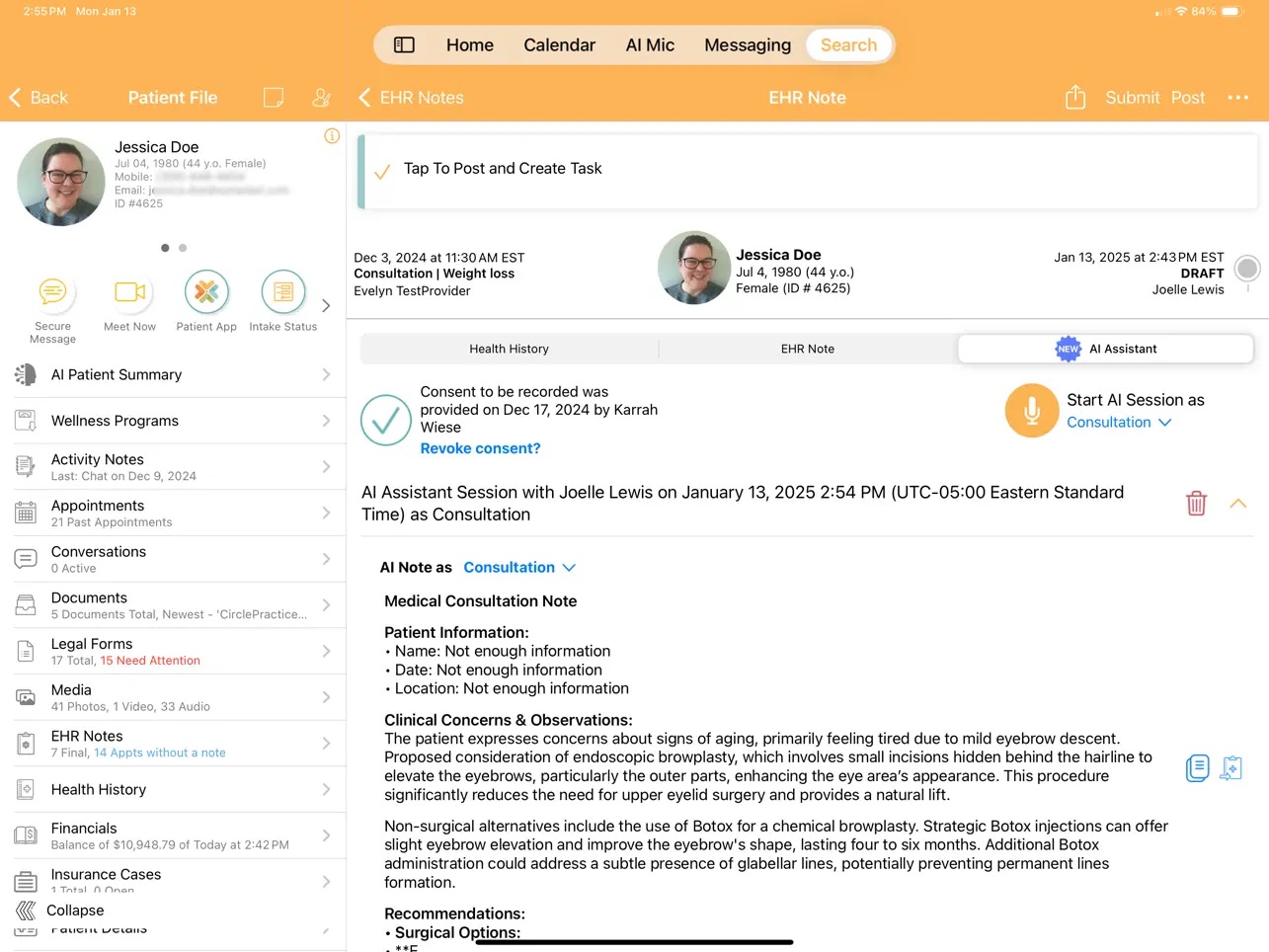
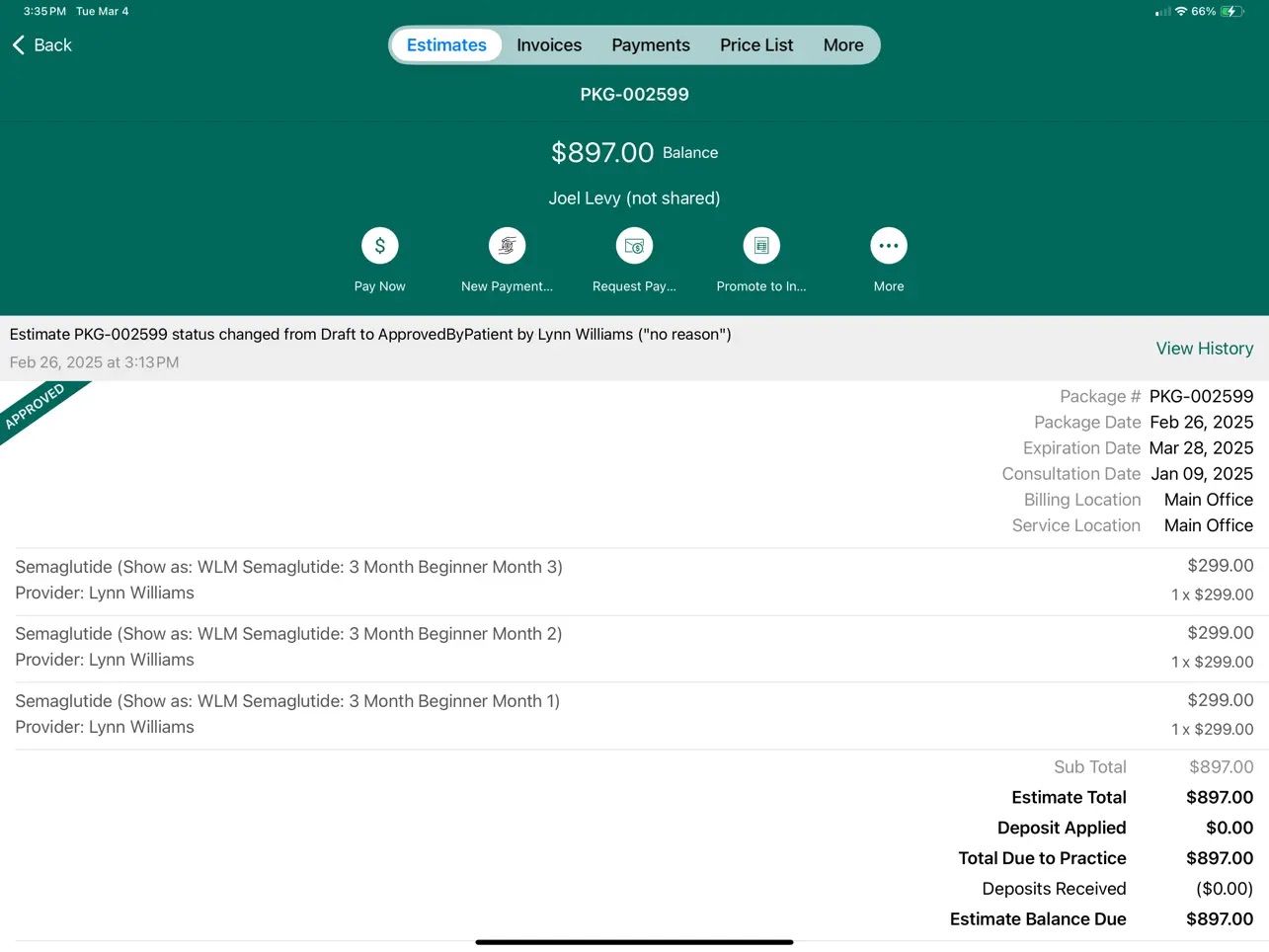
A healthcare platform for plastic-surgery clinics across the US — patient messaging, video consultations, and clinic operations, on iOS and macOS.
What I built
- Cut the crash rate by ~40% through refactoring, monitoring, and defensive engineering.
- Built secure messaging, video calls, and offline-first synchronization for clinical environments.
- Introduced modular MVVM / Clean Architecture; mentored juniors and drove architecture review.
Engineering notes
- Architectural change in a product clinics use every day only works as a marathon of small, boring, individually reversible steps — never a branch that lands all at once.
- Healthcare sets the reliability bar: a crash isn't an inconvenience, it's a clinic that can't see its patients. That changes what "done" means.
- Reactive pipelines (Combine, Swift Concurrency, GCD) removed a whole class of race conditions that manual state juggling kept reintroducing.
TalkNative
An on-device iOS text enhancer that helps non-native English speakers polish their writing — built on Apple Foundation Models, so nothing they write ever leaves their phone.
What I built
- Private by design: zero servers, zero accounts — the whole enhancement pipeline runs on-device via Apple Intelligence.
- Four independent Swift packages (EnhancerCore, PresetKit, HistoryKit, EnhancerUI), each with its own test suite.
- Invoked from any app through a Share extension, and through a custom keyboard extension that replaces text in place.
Engineering notes
- Adopting a framework weeks after announcement means WWDC sessions are the only documentation — no Stack Overflow safety net, so the package boundaries had to absorb API churn.
- Splitting into four packages was a testing decision before it was an architecture one: the core enhancement logic is testable without a UI or a device.
- Scoping honestly — v1 was cut to the Share extension rather than letting in-place replacement block it. The keyboard extension that provides it followed, and is implemented and validated on device.
ClaudeBar
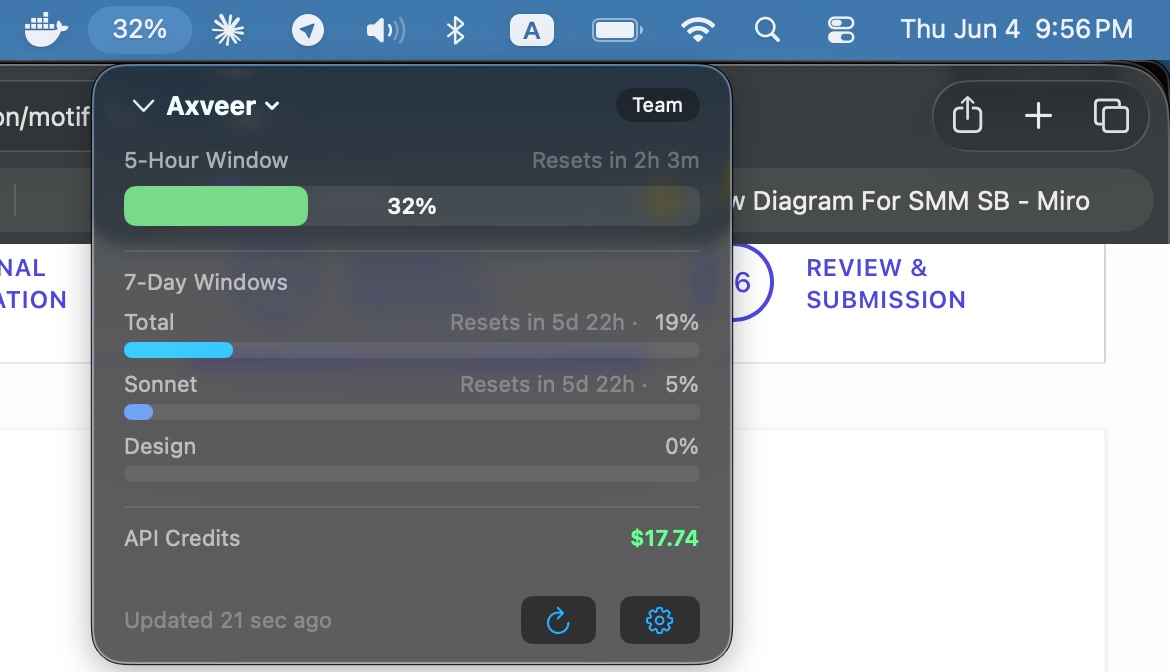
A native macOS menu bar app that shows your Claude.ai usage at a glance — so you know how close you are to your limits before you hit them.
What I built
- Pure Swift, no dependencies. Small, native, and quiet — it lives in the menu bar and stays out of the way.
- Shipped and publicly distributed through my own Homebrew tap (
brew install chiliec/tap/claudebar). - Open source on GitHub, with signing, notarization, and release automation.
Engineering notes
- The indie distribution path outside the App Store is its own discipline: signing, notarization, stapling, a tap, and release automation that makes all of it repeatable.
- Menu-bar apps have an unusual constraint — the app is mostly invisible, so every millisecond of latency and every megabyte of memory is conspicuous.
- A small scope you actually ship beats a big scope you don't.
App Store apps
Four apps taken from idea to the App Store in two months — content, design, release automation and review included. Three share one Kotlin Multiplatform codebase per app across iOS and Android; one is pure SwiftUI.

BaliSurf
iOS + Android · Compose Multiplatform · Sports
- Per-spot surf verdicts for 20 reef breaks, from hand-authored tide, swell and wind rules over free Open-Meteo data.
- Reef bathymetry maps derived from Sentinel-2 satellite imagery and calibrated against on-reef control points.
Callback: Interview Prep
iOS · SwiftUI + SwiftData · Education
- iOS interview prep: 11 topics, ~300 questions, lessons and timed mock interviews. Fully offline, no account.
- Content guardrail tests catch predictable answer positions; store metadata is pushed by scripts against the App Store Connect API.

SLOVO: Russian Phrases
iOS + Android · Compose Multiplatform · Education
- Gamified Russian phrasebook with human audio from native speakers, themed units and a study-then-test loop.
- Shared Kotlin UI and logic for both platforms; 100+ tests green in CI.

Lancar
iOS + Android · Compose Multiplatform · Education
- Offline Indonesian vocabulary trainer: ~1,800 cards with native audio bundled in the app, spaced repetition, three drill modes.
- A content pipeline generates cards and audio; fastlane lanes ship both stores. Live on the App Store and Google Play.
Engineering notes
- Offline-first, no accounts, no backend — private by design, and nothing to page me at 3am. The whole product fits in the app bundle.
- Release engineering is part of the product: fastlane lanes, App Store Connect API scripts and CI take a tagged commit to TestFlight and review without hand steps.
- App Store review is an engineering constraint. BaliSurf cleared a Guideline 4.3(a) rejection by leading the listing with what only it does — satellite reef maps and per-spot rules.